WHAT IS A MARCH THROUGH TIME?
A SHOW | AN EXHIBITION | A SALON | AN EXPERIENCE
THE INTRODUCTION
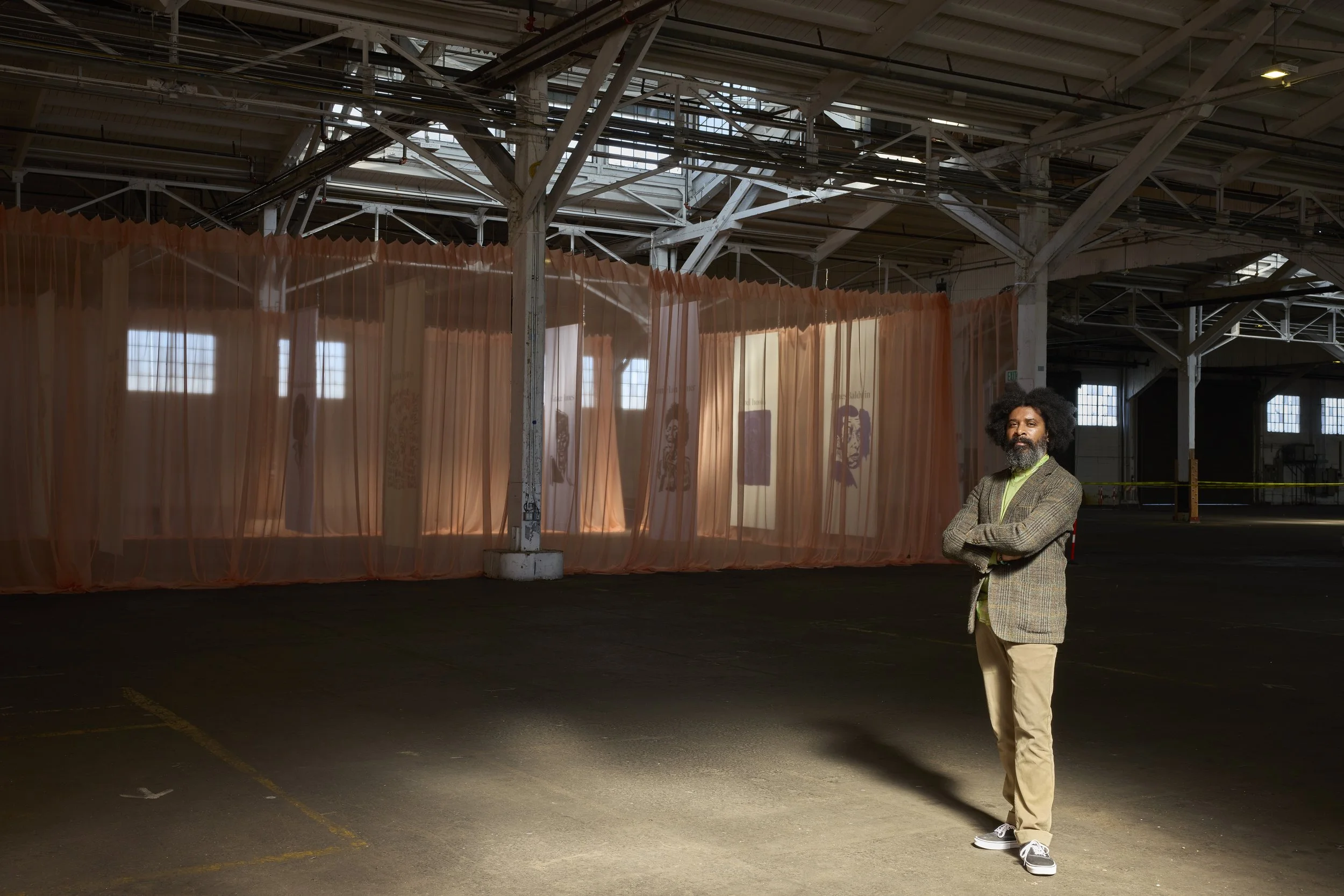
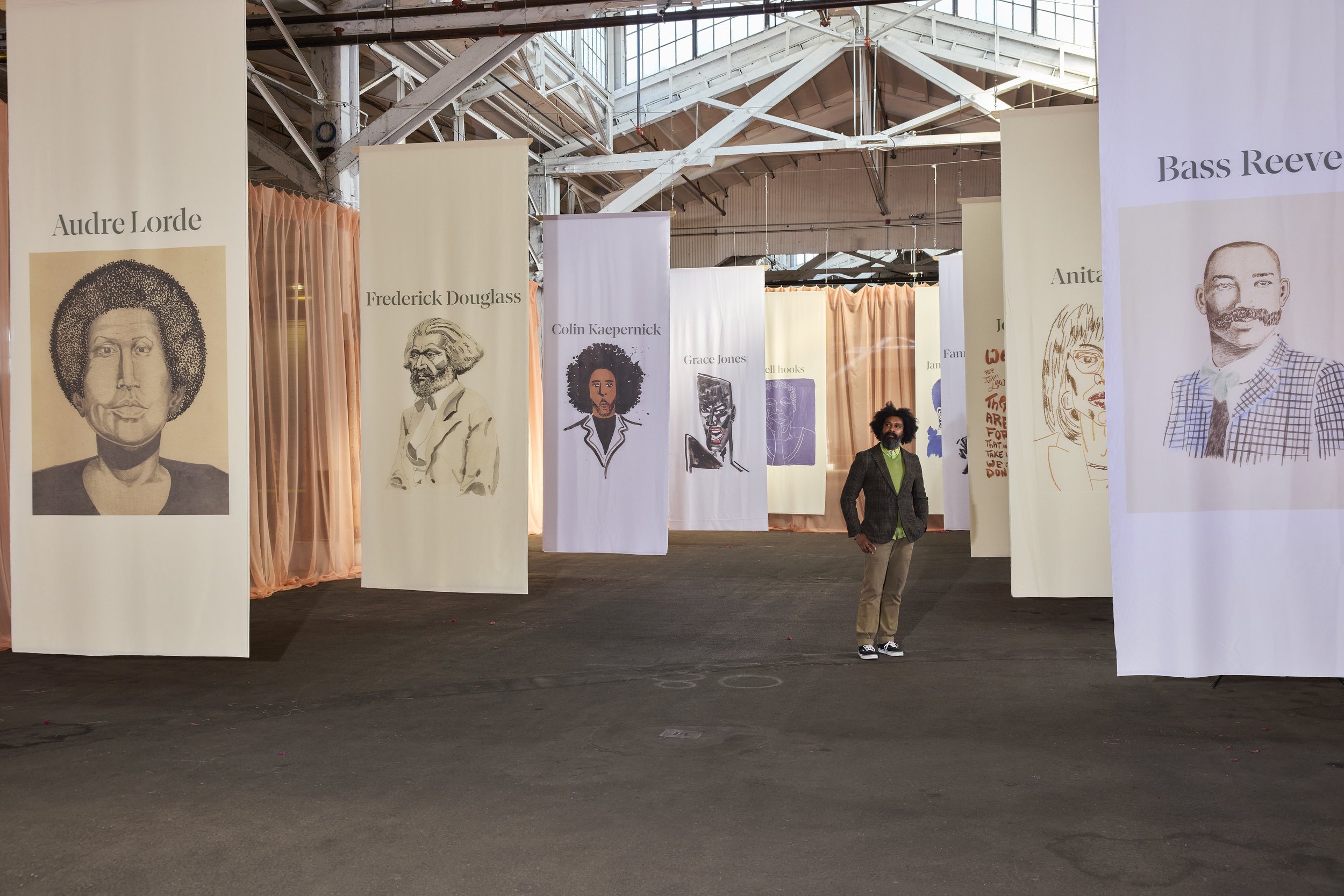
A March Through Time (AMTT) is a living exhibit and educational salon that collapses the distance between art and audience. Evolving from the foundational mandate of Illustrated Black History: Honoring the Iconic and the Unseen, AMTT expands a decade-long cultural investigation into the intersection of history, culture, and universal identity. Blending fine art, community activation, and immersive experience, the space operates fluidly as an exhibition, reflection point, and active civic forum.
Rooted in the belief that time is not linear or flat, but cyclical, AMTT bends how memory and history inhabit three-dimensional space. Stories fold backward into memory and pass through present consciousness to shape future lineages. By framing history as an interconnected cycle, AMTT designs a narrative focused on the entire journey—honoring ancestral wisdom, anchoring present action in past sacrifice, and actively manifesting collective futures through today's choices.
“A March Through Time (AMTT) is rooted in the belief that the lines of time are not linear, they are not flat but rather, they exist cyclically. Our collective paths are holistically interconnected.”
THE story of
american history
– 250 years in the making
2026 marks the 250th anniversary of the United States, from the signing of the Declaration of Independence, a seminal point in our societal awareness. It is a timely marker of our milestones, accomplishments, and mistakes. A March Through Time begins its journey in the spring of 2026, walking alongside this national celebration. The show will offer our audiences the sensorial opportunity to commune and testify on our collective choices.
AMTT was born to walk and reflect alongside this American path with reverence and respect, illuminating bold visions and unrealized potential. The show will offer programming, events, salons, and partnership. It’s an occasion for building a better vision together.
What is history if not individual choices anchored with societal responsibility?